



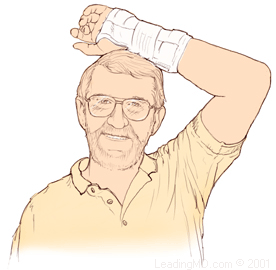
 This first level of treatment is the most conservative.
A wrist splint is used to hold
the wrist in a straight position. The splint is usually worn during
sleep. When sleeping, it is natural to curl up with the wrists bent.
This position places pressure on the median nerve causing the symptoms
of numbness and tingling to flare up. The use of a splint often reduces
these symptoms. Many patients like to wear the splint during the day,
as well. Extreme positions that put pressure on the nerve should be
avoided.
Oral anti-inflammatory medication,
such as ibuprofen, may help reduce the swelling around the tendons.
Once the swelling is reduced and pressure is taken off the median nerve,
symptoms usually lessen. The most common side effect from ibuprofen
is an upset stomach. Taking the medication with food reduces that possibility.
Activities that cause irritation
of the area should be avoided. There are many activities associated
with carpal tunnel syndrome. Whether these activities cause CTS is still
unknown. Nevertheless, repetitive tasks that make symptoms worse should
be avoided. Computers, ten key, cash registers, assembly lines, and
meat cutting are just some of the suspected activities. Computer
use is commonly blamed for aggravating CTS. It is important that
the workstation be arranged to avoid awkward postures. Patients should
take frequent breaks from the computer (at least 5 minutes every half-hour)
and, as much as possible, avoid long hours at the computer. During these
breaks, stretching exercises can be helpful.
Less than half of CTS patients (about 20%
to 50%) become symptom-free with the most conservative treatment. A steroid
injection to reduce inflammation is typically the next step if symptoms
are not controlled by the above treatments. The doctor injects the medicine
into the tunnel using a very small needle.
The success rate for patients receiving injections is again relatively
low, as only 20% to 50% of patients get relief from an injection. The
condition may improve temporarily, but symptoms often return. Injections
are more successful in patients over 60 - 70 years of age than in the
younger population. Patients who experience some improvement with the
injection tend to benefit from surgery, as the improvement indicates that
swelling and pressure were the causes of the problem. If there is no noticeable
improvement after the injection, other conditions causing the symptoms
should be considered.
What types of complications may occur?
Complications from non-operative treatment are few and rare. Taking anti-inflammatory
medication may cause the patient to experience an upset stomach, or possibly
develop an ulcer. The only significant risks are associated with the steroid
injection, and these are small. These risks include infection, weakening
of the tendons, and possible damage to the nerves or blood vessels. The
most common problem of conservative treatment is the failure to relieve
the symptoms. As earlier mentioned, only about half, or less, of CTS patients
have success with the non-operative treatment method.


© 2016 by LeadingMD.com All rights reserved.
Disclaimer