



 Nonoperative Treatment
With non-operative treatment, symptoms can subside in a few days, but more
commonly, relief may take as long as several weeks or months. Treatment
continues as long as the symptoms seem to improve and they do not interfere
with daily activities.
To control symptoms, it may be necessary to make changes in everyday activities
(both work and play). The patient should:
· decrease repetitive motions.
· keep the wrist straight.
· use a proper grip (use as much of the hand and as many fingers
as possible).
· rest periodically and alternate hands.
· use less pressure and slow movements.
Operative Treatment
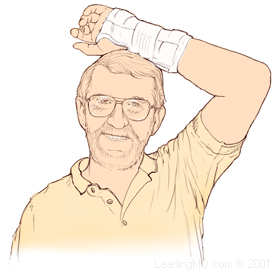
- After surgery, the hand will be bandaged,
often in a splint, and kept elevated. To reduce swelling,
the hand must be kept above the elbow, and the elbow above
the shoulder. Most doctors suggest early finger motion to
prevent stiffness.
- The incision must be kept dry until
the bandage and stitches are removed at the follow-up appointment. Typically,
this appointment occurs about 7 to 14 days after surgery.
- Patients often notice improvement in symptoms
within days after the surgery and some get immediate relief. In more
severe cases, the improvement may occur gradually over several weeks
or months.
- Hand therapists may prescribe exercises
to help improve circulation, motion, and muscle strength. Post-operative
therapy is not always necessary. The doctor should be consulted if stiffness,
scar tenderness, persistent pain, or weakness develops after surgery.


© 2016 by LeadingMD.com All rights reserved.
Disclaimer